FAFQ: Frequently Asked Foolish Questions

It’s said that ignorance is bliss. Whoever said that clearly never lived in a foreign country because ignorance as an expat is a downright, infuriating, maddening and frustrating thing.

I don’t even mean my own ignorance (which is itself, sizable), I mean the ridiculous stuff you are often asked as a foreigner in Japan.

I should make this a touch more polite really. Let’s say, daft questions and comments. As while these inquiries are never ill intentioned, they are rather silly to ask nonetheless. For a while I thought this to be something only the Japanese really did in any great measure:

“Wow, you’re really good at using chopsticks!”

I live here, did you envisage me skewering sushi with a fork? Perhaps a spear? Gobbling it down, nose on the plate, one deep breath away from a head full of wasabi?   

“Are you a foreigner?”

No, no, I’m just a remarkably pasty Japanese person who happens to be half a foot taller than everyone in this supermarket.

“Can you read katakana?”

Noooo, not at all. You caught me, I was merely pretending to read the menu. I just guessed that this place would have coffee and being the improv star I am, I just figured I’d make use of the prop to hand. Ta da…

The first and third comments are pretty common and I don’t take offence, mostly they just result in a slightly confused look across my brow, a raised eyebrow here or there. The second was from a rather rude old man in a supermarket car park. However, with my grandfather having come from Barnsley, that question would be considered to be the height of subtlety back in my house.

I honestly felt before that no one could really top this kind of foolish questioning.

Oh Europe, how you have let me down…

The Guardian’s Paolo Bandini offered this gem from Italy’s Serie A as his personal award for Worst Investigative Journalism in his round-up of the season, when Yuto Nagatomo, who after moving to Italy last summer to join Cesena and then swiftly transferring to Inter Milan in January, was asked by one particularly dumb journalist, “Do you like football?”

One stupid football journalist I can forgive, lord knows we tolerate more than that anyway.

Then I read the end of season Bundesliga round up courtesy of one Raphael Honigstein. When Shinji Kagawa has been one of the stars of the season, despite only playing half of it due to a broken foot, I don’t expect to read that he is deemed a problem by the tabloid Bild because of the following dilemma,

“How the hell are we supposed to tell him apart from [Schalke’s Japanese player] Atsuto Uchida?”

I await the British tabloid response when Ryo Miyaichi makes his debut for Arsenal.

I should probably just apologise to my students now…
Barbershop Barriers: Tales of tiny men and sharp blades

I was sat in an armchair, a very sharp blade pressed to my face. Wielding the blade in question was a tiny Japanese man. Between us we had little means of communication (this being very early in my time in Japan… during my rather less studious period) and I was not entirely sure what he was asking me. He was polite enough to ask it with a smile. Though when coupled with a tiny razor blade… it was, well, more ominous than reassuring.

This was my first trip to the barber in Japan.

Specifically, the barber, not the hairdressers. Japanese men take their coif rather seriously indeed, whereas the sole instructions I have offered at a hair dresser’s or barber’s, whether English or Japanese, for many years now has been nothing more than a, ‘little trim, please.’ Fortunately it was all I needed the first time I visited my local barber in Nagano-Ken. More recent trips have required, “wait, have we met before?” “How do you know my name?” and, “ohhh, I teach your kid.”

A language barrier can be many things, frustrating, funny, confusing and occasionally, well a bit scary. In most day-to-day situations you can rely on folks being patient and understanding of a faltering grasp of their language. The adult population of Japan being generally quite embarrassed by their standard of spoken English (not entirely their fault… but that’s another blog), and being a phenomenally polite people, will generally praise any effort one makes (deserving or otherwise).

However, when talking to children that gap can seem like a chasm. Think of the meandering sentence path of the average five to seven year old and then remove your ability to understand a good chunk of the vocabulary and you’ll be a smidge closer to my position.  The subject of a conversation can burst from absolutely nowhere, they can be incredibly convoluted and just as often as not utterly identical to the conversation you would have in your own native tongue.

In the case of two high school girls this might mean approximately five minutes of back and forth as to how beautiful each other’s hair is, “You think my hair is cute? No not at all, your new haircut is so much cuter…really? No… really, really? No…” Frankly, now that I think about it, this could be two high school boys.

Kindergarten kids can be a joy for this kind of conversation. They will have just learned a new mildly insulting word and simply spend the next ten minutes calling it each other then promptly collapsing in a fit of giggles.

What always amazes me though is the speed at which some kids can ask me questions. One young kid, only five years old burst through the door of the classroom and immediately blurted out,

“Mattosenseikujyakueigodenandesuka?”

“Huh? (In Japanese) Say it again but more slowly please.”

Deep breath

“kujyakuwaeigodenandesuka” (twice as fast)

“Write it for me please”

I check the dictionary

“ah! Peacock!”

“Peacock!!”

Proceeds to do a peacock dance that would have been more helpful at the start of the conversation.

However, from time to time, it’s not just a language barrier, rather a pronunciation issue. The double ‘oo’ sound we have in English can initially be quite difficult for kids on first hearing it. They have a tendency just to make a louder ‘o’ noise and as is natural for them add a vowel to the last letter of the word as 99% of Japanese characters have such an ending.

So, there I am teaching some very young kids different jobs/roles; teacher, student, firefighter…cook.

Me: Who’s this? You don’t know. He’s a cook.

Students: Kok!

Awww crap. 

In these situations it’s an easy fix (so long as I don’t laugh) and within a few attempts they pronounce it correctly and significantly less like a Premier League footballer. However, sometimes the situation is reversed.

Me: Who’s this? He’s a barber.

Students collapse in laughter

Students: BABA!

Me: Barber!

Students collapse again

Students: BABA!

I check my dictionary. Possible meanings, Grandmother…horse riding ground…shit.

Oh shit.

Japan earthquake: An Appeal

It is beyond comprehension. As often as one reaches for the news, for the specifics, the scientific and concrete it simply dissipates at the sight of footage of destruction beyond mortal means.

No words can do justice to the events that occurred here, not immediately. Nor right now, it’s still too close. I wasn’t in the heart of it, I was safe, my building swayed but it did not shudder.

The only real first hand experience I had of it was what many people felt; fear for a friend’s life. However, the people I know who were close to this disaster and continue to remain at the heart of it are safe.

I know this thanks to a global media that has both helped people survive this disaster and also created a perhaps greater impact still. It has multiplied the reach of this tragedy.

For the next weeks and months Japan will dominate every airwave the world over. The terror of tsunami and devastation will be repeated in such a way that this tragedy will long remain in the memory.

This can I hope do more than stun a world for however long the media focus remains on Japan.

Please let it compel you to help in the only way one really can. Give money to those that can help on the ground. Give blood if possible and then when the media cycle ends; remember the people.

A large part of Japan is still standing for two reasons; it planned for this and it was far enough away. The people that were at the heart of this will need more than that. They will need the generosity and kindness of the world. They will need the best we have to offer.

Please give it.

You can donate directly to the Japanese Red Cross here.

For a more sizable list of charities you can donate to see here.


Mind the Flash

Japanese people have mastered the camera pose. Crafted it into a fine art and bequeathed it unto their young in such a fashion that one might even begin to think it genetic, a biological imperative perhaps, an evolutionary tweak that has emerged along with the technology it is bonded to.  Because in the mere instant one has to pose correctly for a photograph, the Japanese are already there, two fingers held aloft in a peace sign yelling, “cheezu!” Meanwhile, I’m blinking like a deer in headlights, stunned by the blast of camera flash.

One photographic incident in particular got me thinking. I was at Fuji Q Highland, an Amusement Park that resides at the base of; you’ve guessed it, Mt. Fuji. Inside are three particularly amazing rides: Eejyanaika (translated to, ‘isn’t it good?’ Ok, not everything translates in a cool way), FujiYama and the mind bogglingly fast Dodonpa.

I was waiting to ride the incredibly fast Dodonpa with a friend whom, repeatedly terrified by announcements over the tannoy as to just how fast this machine is, responded with yelps of, ‘muri!’ or in English, ‘impossible, I can’t do it, argh!’ Once aboard the ride she continued to yell this phrase except for one brief moment that I realized had been the camera flash, only to continue on with her cries afterwards. Instinctively, during an experience otherwise dominated by the excitement and fear of the ride she had twisted, smiled and posed for the camera. I on the other hand was more concerned that my cheeks not tear from my face due to the g-force.

Photography is everywhere in Japan. From high quality camera phones to the ever-present purikura. Photography is incorporated into life here in a way that goes beyond any other nation. The stereotype of a Japanese travel group abroad, all wielding state of the art cameras, endlessly pointing and snapping photographs is a well earned and thoroughly deserved one. While the teenage love of purikura, essentially photo booths with a variety of special effects that can be applied to your group photos are so popular that they can be found with ease almost everywhere you go.

That photography is such a significant part of life here is at times hard to believe, particularly when one considers that the camera industry only began to emerge in Japan in the 1930’s. When of course it was beyond the reach of even the comparatively wealthy as,

“In those days, the average starting salary of a graduate of an elite university in Japan who was hired by bank, the best-paying job, was around 70 yen per month. In contrast, the price of the Leica camera was 420 yen.”[1]

Yet, from those early days has sprung an enormous industry fuelled by a love of technology that is visible in all walks of life and among all ages in Japan. At arcades I have seen young people with staggering coordination in pursuit of the high score on a dance machine and a vast number of people with a mind numbing addiction to Pachinko (a low stakes gambling machine with a resemblance to pinball, without any of the skill). While undoubtedly gaming technologies such as these have had and will continue to have such an affect on us, I still believe that the camera and its simple yet beautiful power to capture a moment will continue to be of greater significance. At least until the day that Wii bowling is entered into the Olympics.

However, the truth is, I can’t help but feel that here in Japan is where technology and society meet first. Through computer games, mobile phones, 3D TVs the Japanese people engage with technology faster and with an aplomb that perhaps only South Korea can beat. As such, if technology and biology are going to crash into one another it’ll happen here long before reaching foreign shores.

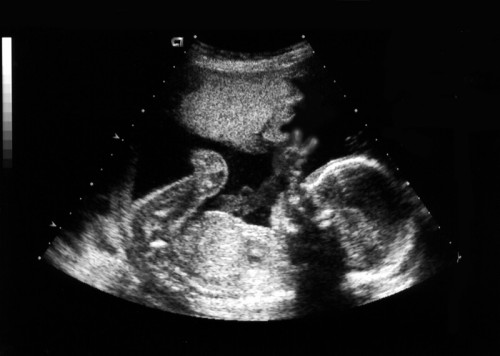
While visiting home this summer I met a friend of a friend, a Japanese Doctor no less and I took the opportunity to pitch this very theory to him. Essentially I believe that the response to the camera has become so ingrained at a biological level, that just as one can tell the sex of a child from an ultrasound, that one could also tell the child’s ethnicity… well, in one particular case.

Note: This picture is the fine work of Max Joseph, find his blog here.

This blog post was originally featured on travelblogs.com as a guest article. The original post can be found here.


Small Town Star: or How to become a minor celebrity in small town Japan

There are certain things I expect when I go to the bakers in my town. One, that I’ll spend way too much money, two, that I’ll glance at the pizza menu with a covetous eye and finally, you know…bread. I wasn’t however, expecting to be told I’m handsome and on top of that famous by my fifty something year old baker. A charming man he may be and a purveyor of quite delicious baguettes most certainly, but previous conversations have tended to remain in the safer arena of weather-based small talk.

Perhaps I ought to offer some context.

The week before this peculiar incident my boss leaned in the window to our office and informed me that a journalist would be attending my next kindergarten class. This was not something I considered to be good news. Don’t get me wrong, I love teaching that class. Kindergarten kids are the best students you could possibly hope for. At that age their brains are sponges and so long as new vocabulary is accompanied by a funny picture or a silly look plastered across my ugly mug they’re happy.  However, the content of these lessons is heavily based on my ability to be amusing to five and six year olds. This of course involves no small amount of silly faces, funny voices and general exaggeration of everything I do. In that context I’m not the least bit embarrassed, however add a video camera to the mix and I’ll be more than a bit self-conscious. It would be safe to say that I have little desire to see what my version of pantomime farce looks like on film.

Fortunately, it was a newspaper reporter, so the most embarrassing thing would be what he could potentially write about me and the inevitably bad photo he would, most certainly, get of me. I am quite un-photogenic indeed. Although in all honesty, my feelings towards the camera are more to do with it revealing the reality of my looks than distorting them in any real way. I simply consider ‘un-photogenic’ to be kinder to my fragile ego.

So the lesson rolled around and there sure enough, sat in the corner of the room was the journalist. He asked me no questions. Asked my boss only two i.e. what’s his name and what country is he from? Then appeared markedly uninterested for the remainder of the lesson. Fortunately for me I was teaching ‘like’ to the kids using food so they had far more fun than the yawning reporter. You’d be amazed at how much controversy and yelling of, ‘eeeeeeee?!’ can be elicited by just one child declaring that they don’t like fried chicken.

It’s probably worth noting that this wasn’t the first time I’ve been in the local paper. In small town Japan the possession of a non-Japanese face naturally affords one a certain amount of celebrity. If you are a teacher doubly so as there is little likelihood of privacy when you teach over a hundred people in a place where six degrees of separation is whittled down to two. Add to that a classroom of adorable kids and it becomes incredibly unlikely that one might ever avoid the spotlight in small town Japan.

In all honesty though, despite the minor intrusion and yawning reporters, it’s worth it.

You only have to look at the photo to see that.

Adults Onry

The other day, while I was dashing around between lessons, running a few errands and the like, I stopped by the local convenience store, otherwise known here as a konbini. While there, I saw a most unusual sight; a Japanese man, that busiest of breeds, finding time for a moment of relaxation in his otherwise busy schedule… to peruse the porn.

For a country with a declining population, a youth apparently less and less interested in sex and a general lack of privacy Japan is surprisingly open about its pornography.

I remember when I used to work in a petrol station mini-supermarket the elaborate dances people would go through in order to somehow, “stumble” across their chosen fare. First to the fridge at the back of the store, then a slow and meandering stroll past the pet food and then… “oh, how did I end up here?” Indeed one of the saddest sights I ever saw was a lorry driver whose basket was filled with a single can of extra strong beer, a pack of ten party sausages with dipping sauce and a Nuts magazine. I almost directed him to where we kept the man sized tissues.

In Britain the more risqué magazines are of course generally kept out the reach of the young and the unusually short by dint of their location on the top shelf. Yet, in Japan the magazines in convenience stores aren’t lined up against a wall in a tower of glossy mediocrity and z-list celebrity gossip. Instead they are kept on a rack just below the shop’s front window where passers by and those parking their cars out front can see who is reading them quite clearly.  Generally, these magazine racks are seen as a local library and it’s not unusual to see four or five people standing in front of them enjoying a leisurely leaf through the pages of a magazine. That they choose to do so even with porn continues to astound me, as I live in a country where the adjective most people would use to describe themselves is, ‘shy.’

Although, I should note that there is a place in my town to buy porn away from the prying eyes of children, a shop that the bus always passes on its way out of town that loudly declares itself as being for, ‘Adults Onry.’

However, this behaviour is not only confined to the konbini. When my father came to visit me last summer I’d mentioned in passing to him about how dirty Japanese men could be and in particular how flagrant they’d be about it. After his first few days in my sleepy little town we hopped on a bus bound for Tokyo. Some hours into the long journey he nudged me and said, ‘Matt I see what you mean, look over there.’ Across the aisle and a few seats ahead was an older Japanese man, admiring the centerfold in his porno mag, holding it vertically so as to fully appreciate the two-page spread.

A friend of mine while visiting Japan was rather stunned by just how visible pornography is here and asked me, “Why on earth don’t they have a top shelf like everywhere else?”

In a country with an average height of five foot seven, the more pertinent question might just be; how would they reach it?