Category Archives: Travel

Pedantic Paperwork II: The tale of the elusive license

When it comes to getting a driving license in Japan, it’s all a matter of timing. The window that you need to get to in the giant mess of a bureaucratic testament to 1980’s flat pack architecture (part of Japan’s peculiar, let’s make buildings that last for precisely twenty eight years and nothing more, attitude to construction) is only open for an hour and half in the morning and after lunch.

Presumably the rest of the time is consumed with filing the mountain of unnecessary paperwork they produce, or perhaps cleaning and polishing their fine array of government issued stamps and stamps. No that isn’t a typo, the first variety are of the wooden handle, rubber base variety. The other are of the, we couldn’t possibly trust more than one person with real currency, lets convert all cash into government issued stamps that are of equal value only within the confines of these four hastily constructed walls, kind. Walls that they do not in fact leave as these currency stamps are issued by the state and returned to the state within mere minutes. Going hastily from the little window nudged into the far corner from where you purchase them, across the corridor to the slightly larger office in charge of producing the flimsy bit of card and minimal plastic which your mug will be digitally plastered onto.

And you thought the post office was a mess? O ye of little faith. There is more madness in Nippon than you have ever dreamed of in your society.

There is of course the endless stream of paper, the details of myriad national licenses held in an enormous folder that quite literally bursts at the seams. The amazing stamp collection, both wooden and paper, the endless people performing quite patently simple tasks, in triplicate and then passed back to the desk behind them to be inputted into a computer that in all likelihood is not connected to any grand database. It is that burgeoning bureaucratic machine, designed to perform every function in the longest fashion possible.

Back at the window for ‘foreign driving license conversion’ I was asked a seemingly never-ending list of inane questions. How much did your driving lessons in the UK cost? How long does it take to pass? What driving school did you use? What is the test course like? What the hell do you mean you drove on real roads? Are you mad?

After this ridiculous inquiry I was beginning to get rather…perhaps… well just a touch impatient. There was an oral exam to go and an eye test and frankly I was bored of waiting. But the gent behind the counter sprung a small surprise. That had been the oral exam.

Huh, I hear you say.

Apparently there has been a spree of (considering there were a sum total of three foreigners getting a license that day, a spree may have been an exaggeration on his part) foreigners forging British driving licenses in order to bypass the driving tests that individuals from other nations such as America have to go through. After this bit of storytelling was voiced my boss noted that she could indeed see how a piece of plastic as poorly constructed as the British license could easily be forged. Shoddy foreign craftsmanship.

One eye test later and I was handed my new, somewhat shiny, mostly cardboard Japanese driving license. Finally free of the red tape I looked at the piece of hastily constructed rubbish in my hands and thought to myself, why would anyone try and forge the British license, when forging the Japanese one would be far easier?
Reverse Culture Shock

I couldn’t tell you what it was precisely that I found strangest. I guess it was a combination of things that seemed utterly alien to me. I could read signs, I understood the pointless announcements bellowing out over tannoy systems and people weren’t even glancing at me from across crowded train carriages.

How had it happened that the very place I call home could affect me like that? Nothing was really a surprise as such, yet there was a distinct feeling of separation to begin with, as if someone had turned down all the settings on a TV. I felt more like I was watching my life in analog than living it in glorious real life HD.

I remember when I first arrived in Japan often feeling like I’d spent half my day working through an economics paper, so taxing was the strain on my mind as it attempted to muddle through the inordinate number of signs and symbols that make up the very basics of modern life. In an English speaking country, or even one that makes use of the Roman alphabet the way the mind is able to distinguish between the important and the utterly useless is a skill you already possess and as such your mind makes attempts to streamline its workload by dismissing quickly on an unconscious level what is relevant and what isn’t. Yet, here in Japan that simply isn’t possible and so your mind attempts to grapple daily with doors to which it does not hold the key. It can be a tiring, though ultimately rewarding process when one gets even just a toe in that door. In comparison, England and the sights, smells and sounds of home, while a welcome experience seemed to come all too easily.

Over the course of a couple days it began to fade, this feeling of detachment and life at home took on a semblance of the old sense of regularity. Though even that was fleeting as in my limited time at home I made an attempt to see as many friends and family as I could realistically squeeze in and so most days I found myself living a perpetual stream of Saturdays where I would grab coffee, lunch, dinner or far too many beers with friends and family. My body did not thank me for all this self-abuse of caffeine, fat, salt and alcohol but my mind did. The chance to really switch off, to give my brain some real downtime has been welcome and so I find myself now back in Japan with a real desire to push on, to keep studying and traveling in an attempt to grasp a little more of this distant land that for now I still call my home.

That I can do so is largely down to my wonderful friends and family who managed to find the time to help me distil a frankly ridiculous number of experiences into my time home.

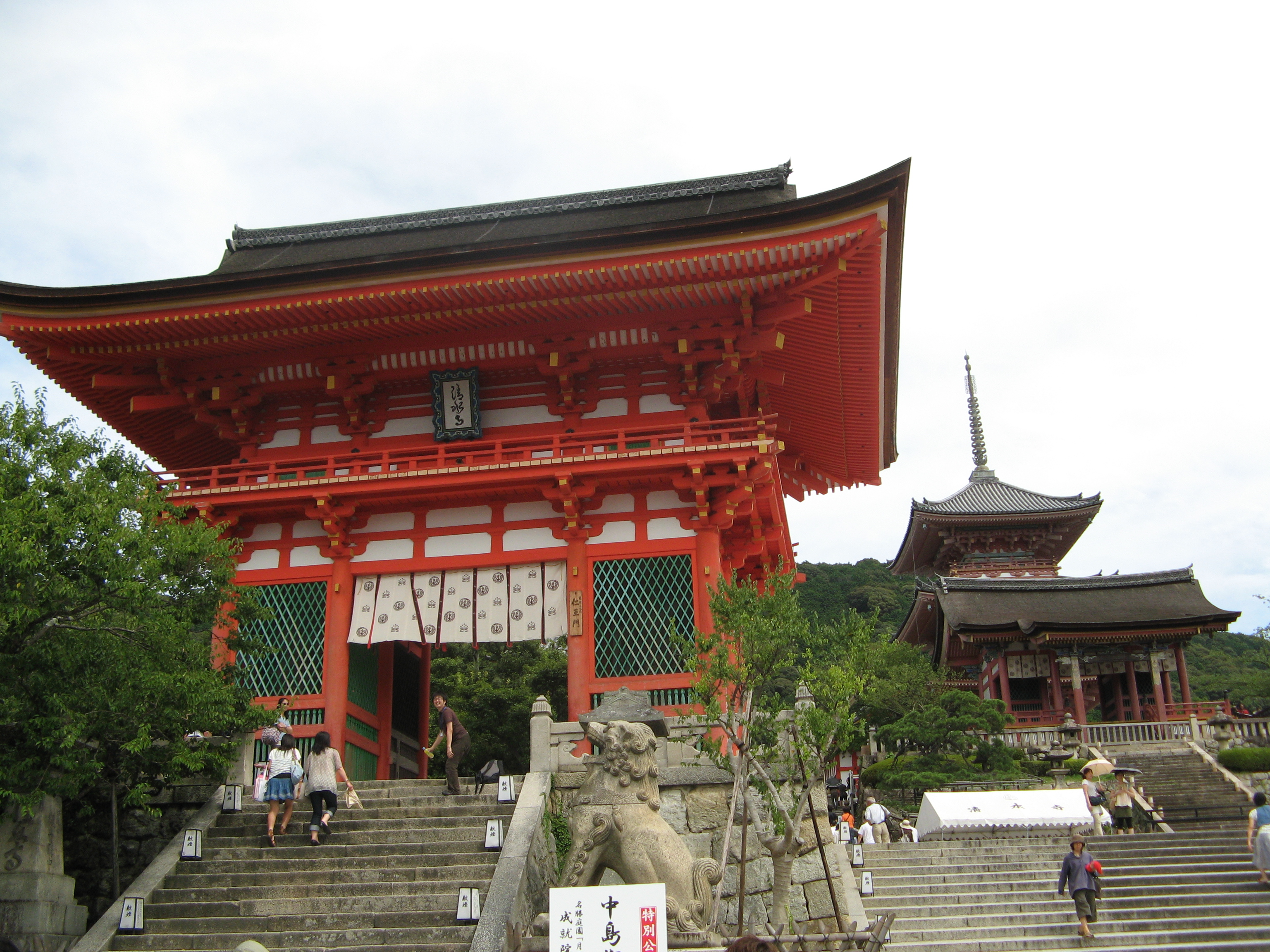
I attended the fairytale wedding of two of my friends, slept two nights on a boat in Southampton while attending the ‘Passage to India’ themed regatta in the village one of my dearest friends now calls home, I got to see my two adorable little second cousins who grow bigger by the day, ate curry and drank ale in the company of my favourite physicists, computer scientist and med student (now Doctor), had a night or two in the ‘udd, found myself proving to a drunk in a bar that I really do live in Japan by having him google this very blog (when he saw the picture at the top of the previous post he said, ‘Woah! Is that your house?!’ ‘No.’ I said, ‘that’s Kiyomizu Temple.’) and even found time to graduate from last years Masters degree in all its pomp and hilarious irony (a video clip of a student had her noting that, ‘the university isn’t the least bit pretentious’, cue brass band announcing the entrants in all their academic finery). Oh and Pad Kee Mao… how I had missed you.

I could easily get a blog post out of every one of the wonderful days spent in the company of the people I love, but I would feel like I am intruding and frankly I couldn’t do you all justice.

You mean more to me than words on a screen could ever convey.

P.S. Sorry to anyone who I skipped in my description of what I got up to. This post is soppy enough without a never ending paragraph.

A9VX6S9Z6Z99

Kyoto in the Company of Teenagers

Beneath Kiyomizu Temple there is a corridor where only a single speck of light exists. The rest is bathed in utter darkness, as if a thick black curtain has descended and left you blind to the world. To navigate through this impenetrable night one must keep a hand running along a length of rope, beaded with wooden balls, skimming your fingers as you wade through step by step. This is Tenai-meguri and one’s journey into it is figuratively the journey into the womb of Daizuigu Bosatsu, the mother of Buddha who is said to be able to grant wishes. One might imagine such an experience to be vaguely spiritual. The immersion in utter darkness, the total loss of a sense one relies upon so greatly. This might be so. In the darkness I might have found tranquility, an inner peace or perhaps a touch of revelation…

“Aye! Where you gone? Oh you’re behind me… wait so who’s in front of me… what’s that? Wait is that my foot or your foot? … argh a wall!”

A blood curdling scream.

“Are you ok?”

“Yeah… turned out to be the curtain at the exit.”

You see I had foolishly attempted a Zen like experience in the company of ten Yorkshire teenagers.

Perhaps I should explain. A good friend of mine is a Girl Guide Leader back in gloriously green Yorkshire. Which roughly means that she attempts to control a horde of teenage Yorkshire lasses on a weekly basis. How she manages to do this and retain a semblance of sanity I do not know, as teenagers of any ilk, never mind northern lasses, are a hard bunch to look after. If it isn’t self evident, when I say ‘look after’ I actually mean, ‘protect the general public from.’ It was in this role that my friend had brought her young charges to Japan and invited me to catch up with them for a day of sightseeing.

Now despite what the above may say, I don’t want you to think unkindly of this bunch. I was actually thoroughly impressed with their efforts in Japan. Thinking of how I might have reacted to Japanese culture as a teenager brings a wince to my face, in contrast each of these girls threw themselves into the experience with gusto. Noodles were devoured at pace, okonomiyaki as if consumed through a straw (so I was informed) and the bitter, thick tea of a tea ceremony was drunk with a smile and a respect for the effort and tradition involved in its creation. They even managed to ask some very insightful questions about Japanese culture… once they had got over the initial shock of their guide leader running to hug me upon my arrival.

By the end of the afternoon, after a long day spent under the hot summer sun it was however, rather obvious that the poor girls were beginning to wane. I couldn’t blame them, jetlag, culture shock and endless sightseeing are exhausting individually and they had at one point or another in their journey gone through all of them. So, arriving at a food festival on the banks of the river they looked rather less interested than before. I on the other hand had turned into a demented toddler, bouncing and grinning like an idiot at the thought of an endless variety of Japanese food. One variety in particular had been on my mind all day as I was slowly steam cooked in the unabating humidity; kakigori (I admit to being a simple creature). Quickly I found a source for my fix of strawberry flavour and shaved ice. Smiling, with a cup of delicious kakigori in hand I turned to find myself surrounded. Funny how teenagers get a second wind when dessert is available.

Pedantic Paperwork

Paperwork. God damned Japanese, paper pushing, bureaucracy at its finest. One hour before I’m due to hop on a bus bound for Nagoya, followed by a train to the airport, I get a call from the Japanese post office. I get the gist of the call. They are calling about a money transfer to the UK I set up two whole days earlier. Meaning the pointlessly pedantic, picky, sodding forms I filled out two days ago have been lingering in the office for some time. As far as I can tell there’s a problem (they wouldn’t be calling otherwise) with the reason I’m sending my money. Having explained it clearly two days prior I ask the guy to call back in ten minutes when he can speak to my boss who will be able to discern the reason for the call far better than I can with my shoddy Japanese.

What turns out to be the problem? Apparently sending money to my account in England is an insufficient explanation for the transfer. So sending my money, to my account needs clarifying. ‘Fine’, I tell my boss, ‘tell him it’s for bills.’ ‘What bills?’ the man on the phone asks. ‘Plane ticket, tell him it’s the plane ticket.’ Apparently that’s enough justification. Just.

The post office in Japan is one of the finest examples of the excessive bureaucracy that allows Japan to maintain a fairly low unemployment rate. Whether this is the prime motivating factor for such excessive paperwork is debatable. Some part is certainly played by the ironic mistrust of modern technology that is all pervasive in Japanese government work.

Prime example in day-to-day life is the continued heavy use of fax machines. While an old man’s business card may have no email address in sight, the fax number will hold pride of place. I have never gotten my head around how a country which watches TV on its mobile phones insists on these ageing contraptions.

Another example was when I went to Nagano City to renew my visa, never mind that the place was fairly bereft of computerization in any form, but the lift with giant Lost in Space vacuum tube technology buttons, as big as a roll of fifty pence coins were a defiant swipe at the modernity that has swept through the rest of life here.

Yet, this ridiculous charade with the post office left me pondering something else aside from the creaking nature of change. If the specific use of my money is in question, must I consider bank transfers from the post office in Japan to have equivalent conditions to the ones my mother once imposed on birthday money? One may not transfer one’s own money outside of the Land of the Rising Sun unless you promise not to spend it all on sweets and strip clubs.

In addition, how much detail would have been too much detail? Bills wasn’t enough, plane ticket was. Yet, what if possessing not one dishonest bone in my body, but plenty of deviant kinky ones I revealed that it was to fund the spiraling costs of an expensively imported, inflatable harem that left my neighbour with a Japanese love pillow looking decidedly well adjusted.

In all likelihood he’d probably have just recommended a trip to Akihabara and that we not bother with the paperwork after all.

Slurpy Noodles and Hamburger Sushi

Food in Japan is a curious beast. It is at times a gloriously wonderful thing, beautifully, even artfully constructed from an array of ingredients while remaining remarkably simple. At other times it’s a cup noodle. But at least the Japanese have a clear idea of what Japanese cuisine is. From snack to fine dining there runs a thread that identifies the creation as Japanese through and through.

But that’s a lie, if I’m honest.  Generally it is far easier to identify something as being part of Japanese cuisine than to do the same with British food. It’s there in British food, I just think that it has become much more internationalized as immigration and empire has completely altered the make up of British cuisine. Japan, a considerably more homogenous nation than the UK perhaps has a more singular culinary identity, but it is by no means Japanese to the bone.

Japanese cuisine, like every other nation in the world is open to the effects of globalization. Their attempt at an Italian style pizza can be found in every supermarket and many restaurants. In most cases it doesn’t compare to the original, or in my mind the American variant but they love it nonetheless. I used to work in an Italian restaurant, scrubbing baked on lasagna off of pans, pizza dough from plastic trays and dodging flying frying pans flung haphazardly towards the sink with a trajectory that were I not quick on my feet would have taken them straight through the back of my head. Health and safety, which is to say, my health and safety were not always cared for, but one thing they made sure was right was the pizza oven; four hundred degrees plus, the required temperature for a true Italian pizza. Here in Japan, the oven sits at 220 degrees. It’s a somewhat soggier creation.

I recently discovered from an article by Paul Greenburg, that even tuna of all things is not in the least bit traditional fare in Japan. The fat tooth required to crave and devour such a fatty, muscular variety of fish flesh was acquired with the introduction of beef into the Japanese diet only some fifty or so years ago. So quickly have they cultivated this taste that the Bluefin Tuna is all but buggered, avoiding extinction wise. As such, even something as Japanese as sushi and sashimi is not spared from the whim and caprice of the global market place. Topping that rectangle of rice with a wedge of tuna flesh simply wouldn’t have occurred to the Japanese a hundred years ago, it would have been too heavy a dish. Now in Kappa Sushi they put a hamburger on top along with a healthy dollop of mayonnaise.

Then there is ramen. The slurpy noodle.  An incredibly popular dish in Japan that finds its origins in China. Ramen joints are a late night thing for me. Steaming bowls of noodles, meat, a few bits of veg and half an egg floating in a brothy mix while delicious at the right time (approximately just under one too many beers into a night out) hold slightly less appeal to me come the sober light of day. Though I’ll admit that this is in part a weather thing. In the stifling humidity of the Japanese summer a heavy dish like ramen doesn’t appeal all that much. But come winter, being huddled over the bowl will take on a whole new dimension of culinary pleasure. There is an additional benefit to this too. While at times I feel self conscious in Japan eating something as delicate as sushi while simultaneously trying to shove it in my mouth in one mouthful as the Japanese do, slurping noodles, face barely above the bowl while sat at a counter is about as relaxed and informal as Japan gets. It’s a welcome break.

I’ve had some weird and wonderful eating experiences in Japan. I’ve eaten intestines hot off the electrical griddle at a house warming party in Shizuoka city, Hiroshima style Okonomiyaki (see Hiroshima post for description of the wonderful dish) off of the teppan in a restaurant that was little more than an old ladies living room  and shabu shabu (cooking thinly sliced meat and vegetable in a boiling pan of water then dipping them in sauce) at a friend’s dining room table while sipping sake with her father.

One event that tends to come to mind though is the time I ate dinner at a small izakaya (bar/restaurant) in Shibuya, Tokyo. Having already eaten my friend and I tried to turn down the chef’s initial effort but to no avail. It was delicious, it was beautiful and beyond it being green and containing some tuna I couldn’t tell you what it was. I tried to tell the man I was full when the second dish arrived. I’m glad he didn’t believe me because it was tataki, slightly seared slices of tuna, and it is incredible. My mouth waters at the very thought of it. Finally he asked me whether I like tako (octopus). I nodded. This was a mistake. He reached into a blue plastic bag behind the counter and proceeded to pull out a live baby octopus that immediately wrapped its tentacles around his arm. Frantically I told him not to start cutting and blow torching the poor thing up in front of me. Not that I have a problem with eating meat in any way, I just don’t see why an animal should die when someone isn’t going to eat it. Fortunately, the chef put the poor little blighter back in his blue bag and bucket, slowly pulling the little suckers from his arm.

I had a slice of him later. Not bad. A little chewy if you must know.

Harry Potter and the Matsukawa Matsuri

Japan in the summer is hot, it’s humid and frankly downright unpleasant at times. In addition, we’re currently experiencing the last vestiges of the rainy season or ‘tsuyu’, which means that I am never without an umbrella.The Japanese summer does have however, one major redeeming feature. It’s festival time.

What does this mean? Well the usually quiet streets of every village or town will be full to the brim with people of all ages. Little kids clad in kimonos strike a traditional tone somewhat tempered by the Pikachu mask while grown men sway and bounce as they carry large wooden floats down the street powered only by sheer force of will and a plentiful supply of sake.

Then there’s the street food. The takoyaki (octopus dumplings), the yakisoba (fried soba), barbecued ika (squid), barbecued everything on a stick, and most necessary in such weather, all manner of kakigori (flavoured ice) to lessen the suffering of my scolded tongue; the takoyaki was particularly hot. My friend believes that the takoyaki is in fact super heated to drive sales of the kakigori and beer.

Considering how quiet these little Japanese towns can be it is absolutely wonderful to see them packed to the brim. Local dance groups perform for the crowd, hanabi (fireworks, though the literal translation is fire flower) burst in the clear night sky, shimmering against the black night. All the while the booze flows quite freely. In fact, if the guys carrying the floats down the street aren’t very hammered indeed, well you’re simply in the wrong kind of town because the festival season is the time of year when the otherwise polite and restrained Japanese let their hair down.

Towards the end of the festivities a friend of mine, another English teacher, bumped into a former student of his. Standing on the side of the road and being quite the talkative bunch, particularly after a few beers, we ended up talking not only to his former student but to many a passerby. In particular the five of us gaijin English teachers there that night, met a very nice Malaysian family. Having revealed our various nationalities (Serbian, American, Canadian and English) the parents began trying to remember what English person I could possibly remind them of. With floppy brown hair, dark brown eyes and a fairly quintessential English accent, I’m used to being compared to pretty much anyone out of a Richard Curtis movie. However, I’d made a fatal mistake. I was wearing my glasses. I give a warning now to any Englishmen of the bespectacled variety that ventures onto foreign shores, there is only one man, nay boy, you will be compared to should you meet anybody under thirty or with children. You may think the individual in question, who you have no doubt guessed the identity of by now (mostly by dint of the title) is a wonderful chap, and in real life he may perhaps be just that, but in literary form he is a multi-million pound boy wizard who has never captured my cynical imagination.

So having raised giggles from all around with my resemblance to Harry sodding Potter, I thought it couldn’t get any worse. Then someone said, ‘cast a spell! You know, for the kids.’

Lets get something straight. This was in no way, for the kids, the kids were simply bemused by the random collection of foreigners. This, this was for the parents and my friends.

My cynicism however, only goes so far. Handed the inflatable toy sword of one of the kids I sheepishly proceeded to cast a spell above his head.

Ah well, if all I have to do to enjoy festival season in Japan is occasionally impersonate a fictional wizard I’ll do it.

I won’t be wearing my glasses to another festival mind you.