Category Archives: Living Abroad

Mind the Flash

Japanese people have mastered the camera pose. Crafted it into a fine art and bequeathed it unto their young in such a fashion that one might even begin to think it genetic, a biological imperative perhaps, an evolutionary tweak that has emerged along with the technology it is bonded to.  Because in the mere instant one has to pose correctly for a photograph, the Japanese are already there, two fingers held aloft in a peace sign yelling, “cheezu!” Meanwhile, I’m blinking like a deer in headlights, stunned by the blast of camera flash.

One photographic incident in particular got me thinking. I was at Fuji Q Highland, an Amusement Park that resides at the base of; you’ve guessed it, Mt. Fuji. Inside are three particularly amazing rides: Eejyanaika (translated to, ‘isn’t it good?’ Ok, not everything translates in a cool way), FujiYama and the mind bogglingly fast Dodonpa.

I was waiting to ride the incredibly fast Dodonpa with a friend whom, repeatedly terrified by announcements over the tannoy as to just how fast this machine is, responded with yelps of, ‘muri!’ or in English, ‘impossible, I can’t do it, argh!’ Once aboard the ride she continued to yell this phrase except for one brief moment that I realized had been the camera flash, only to continue on with her cries afterwards. Instinctively, during an experience otherwise dominated by the excitement and fear of the ride she had twisted, smiled and posed for the camera. I on the other hand was more concerned that my cheeks not tear from my face due to the g-force.

Photography is everywhere in Japan. From high quality camera phones to the ever-present purikura. Photography is incorporated into life here in a way that goes beyond any other nation. The stereotype of a Japanese travel group abroad, all wielding state of the art cameras, endlessly pointing and snapping photographs is a well earned and thoroughly deserved one. While the teenage love of purikura, essentially photo booths with a variety of special effects that can be applied to your group photos are so popular that they can be found with ease almost everywhere you go.

That photography is such a significant part of life here is at times hard to believe, particularly when one considers that the camera industry only began to emerge in Japan in the 1930’s. When of course it was beyond the reach of even the comparatively wealthy as,

“In those days, the average starting salary of a graduate of an elite university in Japan who was hired by bank, the best-paying job, was around 70 yen per month. In contrast, the price of the Leica camera was 420 yen.”[1]

Yet, from those early days has sprung an enormous industry fuelled by a love of technology that is visible in all walks of life and among all ages in Japan. At arcades I have seen young people with staggering coordination in pursuit of the high score on a dance machine and a vast number of people with a mind numbing addiction to Pachinko (a low stakes gambling machine with a resemblance to pinball, without any of the skill). While undoubtedly gaming technologies such as these have had and will continue to have such an affect on us, I still believe that the camera and its simple yet beautiful power to capture a moment will continue to be of greater significance. At least until the day that Wii bowling is entered into the Olympics.

However, the truth is, I can’t help but feel that here in Japan is where technology and society meet first. Through computer games, mobile phones, 3D TVs the Japanese people engage with technology faster and with an aplomb that perhaps only South Korea can beat. As such, if technology and biology are going to crash into one another it’ll happen here long before reaching foreign shores.

While visiting home this summer I met a friend of a friend, a Japanese Doctor no less and I took the opportunity to pitch this very theory to him. Essentially I believe that the response to the camera has become so ingrained at a biological level, that just as one can tell the sex of a child from an ultrasound, that one could also tell the child’s ethnicity… well, in one particular case.
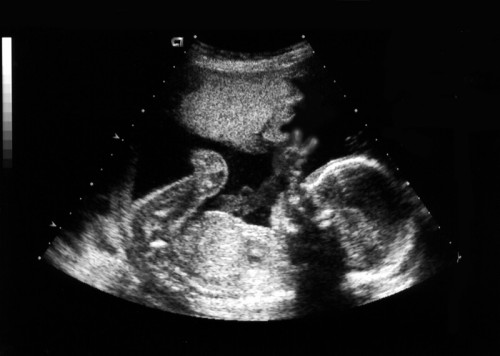
Note: This picture is the fine work of Max Joseph, find his blog here.

This blog post was originally featured on travelblogs.com as a guest article. The original post can be found here.


Small Town Star: or How to become a minor celebrity in small town Japan

There are certain things I expect when I go to the bakers in my town. One, that I’ll spend way too much money, two, that I’ll glance at the pizza menu with a covetous eye and finally, you know…bread. I wasn’t however, expecting to be told I’m handsome and on top of that famous by my fifty something year old baker. A charming man he may be and a purveyor of quite delicious baguettes most certainly, but previous conversations have tended to remain in the safer arena of weather-based small talk.

Perhaps I ought to offer some context.

The week before this peculiar incident my boss leaned in the window to our office and informed me that a journalist would be attending my next kindergarten class. This was not something I considered to be good news. Don’t get me wrong, I love teaching that class. Kindergarten kids are the best students you could possibly hope for. At that age their brains are sponges and so long as new vocabulary is accompanied by a funny picture or a silly look plastered across my ugly mug they’re happy.  However, the content of these lessons is heavily based on my ability to be amusing to five and six year olds. This of course involves no small amount of silly faces, funny voices and general exaggeration of everything I do. In that context I’m not the least bit embarrassed, however add a video camera to the mix and I’ll be more than a bit self-conscious. It would be safe to say that I have little desire to see what my version of pantomime farce looks like on film.

Fortunately, it was a newspaper reporter, so the most embarrassing thing would be what he could potentially write about me and the inevitably bad photo he would, most certainly, get of me. I am quite un-photogenic indeed. Although in all honesty, my feelings towards the camera are more to do with it revealing the reality of my looks than distorting them in any real way. I simply consider ‘un-photogenic’ to be kinder to my fragile ego.

So the lesson rolled around and there sure enough, sat in the corner of the room was the journalist. He asked me no questions. Asked my boss only two i.e. what’s his name and what country is he from? Then appeared markedly uninterested for the remainder of the lesson. Fortunately for me I was teaching ‘like’ to the kids using food so they had far more fun than the yawning reporter. You’d be amazed at how much controversy and yelling of, ‘eeeeeeee?!’ can be elicited by just one child declaring that they don’t like fried chicken.

It’s probably worth noting that this wasn’t the first time I’ve been in the local paper. In small town Japan the possession of a non-Japanese face naturally affords one a certain amount of celebrity. If you are a teacher doubly so as there is little likelihood of privacy when you teach over a hundred people in a place where six degrees of separation is whittled down to two. Add to that a classroom of adorable kids and it becomes incredibly unlikely that one might ever avoid the spotlight in small town Japan.

In all honesty though, despite the minor intrusion and yawning reporters, it’s worth it.

You only have to look at the photo to see that.

Adults Onry

The other day, while I was dashing around between lessons, running a few errands and the like, I stopped by the local convenience store, otherwise known here as a konbini. While there, I saw a most unusual sight; a Japanese man, that busiest of breeds, finding time for a moment of relaxation in his otherwise busy schedule… to peruse the porn.

For a country with a declining population, a youth apparently less and less interested in sex and a general lack of privacy Japan is surprisingly open about its pornography.

I remember when I used to work in a petrol station mini-supermarket the elaborate dances people would go through in order to somehow, “stumble” across their chosen fare. First to the fridge at the back of the store, then a slow and meandering stroll past the pet food and then… “oh, how did I end up here?” Indeed one of the saddest sights I ever saw was a lorry driver whose basket was filled with a single can of extra strong beer, a pack of ten party sausages with dipping sauce and a Nuts magazine. I almost directed him to where we kept the man sized tissues.

In Britain the more risqué magazines are of course generally kept out the reach of the young and the unusually short by dint of their location on the top shelf. Yet, in Japan the magazines in convenience stores aren’t lined up against a wall in a tower of glossy mediocrity and z-list celebrity gossip. Instead they are kept on a rack just below the shop’s front window where passers by and those parking their cars out front can see who is reading them quite clearly.  Generally, these magazine racks are seen as a local library and it’s not unusual to see four or five people standing in front of them enjoying a leisurely leaf through the pages of a magazine. That they choose to do so even with porn continues to astound me, as I live in a country where the adjective most people would use to describe themselves is, ‘shy.’

Although, I should note that there is a place in my town to buy porn away from the prying eyes of children, a shop that the bus always passes on its way out of town that loudly declares itself as being for, ‘Adults Onry.’

However, this behaviour is not only confined to the konbini. When my father came to visit me last summer I’d mentioned in passing to him about how dirty Japanese men could be and in particular how flagrant they’d be about it. After his first few days in my sleepy little town we hopped on a bus bound for Tokyo. Some hours into the long journey he nudged me and said, ‘Matt I see what you mean, look over there.’ Across the aisle and a few seats ahead was an older Japanese man, admiring the centerfold in his porno mag, holding it vertically so as to fully appreciate the two-page spread.

A friend of mine while visiting Japan was rather stunned by just how visible pornography is here and asked me, “Why on earth don’t they have a top shelf like everywhere else?”

In a country with an average height of five foot seven, the more pertinent question might just be; how would they reach it?


Neon Nagano

Japan is littered with modernity. Quite literally littered, as when one drives through Japan at night one gets the impression of a land where technology, bright flashes of light and commercialism were merely dropped along the edge of the road with little thought to the world they were creating here. Indeed planning permission would appear to most people to be an alien concept to the Japanese. While the biggest cities are full of impressive architectural accomplishments it’s hard not to feel that Japan’s more rural cities were dragged into the blueprint for a modern Japan as something of an afterthought.

Last weekend, driving from my relatively quiet city, where the centre of town can charitably be said to be rather quiet, I drove along a major Nagano route heading for a neighbouring city where a friend of mine lives. In the daylight I know driving in Nagano to be a breathtaking thing. The countryside appears to endlessly stretch out to a horizon that is so beautiful that from time to time I wonder whether in truth I might be the victim of a Trumanesque hoax, that someone has in fact painted this skyline, a vast and beautiful deception where every winter armies of workers abseil down the face of a giant metal dome in order to paint the mountaintops white.

However, at night it’s a different story entirely. Where once fireflies and the stars were the only thing to light up the night sky, now an endless stream of neon runs alongside the rivers and roads in Nagano’s valleys. All the stores are the same wherever you go along this long stretch of road, Department store followed by McDonald’s, supermarket by pachinko parlour, glasses store (sporting a giant neon pair of spectacles of course) by the same shoe shop you saw 5km earlier. All marked at regular intervals by a Familymart, a Lawson’s or Seven/Eleven.

I’ve said before that Japan has managed to deal with globalization in a fascinating way, picking and choosing what aspects of culture and commerce that set up shop here. But when confronted by this long line of identikit construction and expansion it’s hard not to feel that in some places they let the flood barriers collapse.

While on that road returning home I might have been more saddened by the show of lights were it not for a few things. I had spent part of the previous evening at an open mic music night in a small town. The place was filled with a mix of Japanese and foreigners alike all enjoying the music, whether the lyrics were Japanese or English. My friend and I swiftly followed it up with a few beers in an Indian themed bar where the food was warm and the owners welcoming. Finally finishing our evening by devouring one of the best cheeseburgers I am ever likely to taste at a bar covered in Americana bric-a-brac.

These places were the product of globalization at its best, a place where two cultures can meet and get the best from one another. Do I wish these places were only a short walk from my own apartment? Yes, of course. But then they’d probably build it next to a department store and since you wouldn’t be able to see it behind that behemoth it’d need something bright and colourful so you wouldn’t miss it… maybe a splash of neon would do the trick.

Dear Colonel Santa

Pulling at plastic wrapping, contorting the fragile cardboard box within, peering intently at the numbered squares adorned with cartoon images of reindeer and a fat man in a dapper red number, with a look firmly plastered across their faces that said, “what the hell is this thing?”

It was an advent calendar. Something that for my whole life I’d taken for granted. A fixture of my childhood for which the theme of the box chosen, based on either the cartoon character on front or as I got older the chocolate within, was taken with great care. The very thought that someone might have no clue as to what it was had never occurred to me in the slightest.

I’d always considered certain things to be at the forefront of globalization, dispensed across the global by Coca-Cola and McDonald’s; I figured most of the commercial aspects of Christmas to be among them. Then again, I hadn’t a clue as to 99.9% of Japanese holidays when I arrived here so the double standard was perhaps unfair.

But there is one extenuating circumstance. I didn’t just describe the look of kids but of senior citizens.  Which in a way, when I think about for more than a mere moment makes considerably more sense, despite my initial surprise. Children for one are simply pleased with something new, bright and colourful which they are told has sweets inside. Adults tend to question the purpose of packaging a bit more. Children simply want to know the rules of this mysterious new object and how to extract chocolate from it.

Then there’s the element of media saturation. Anyone who has grown up in a developed nation over the last fifty years has been literally drowned in American pop culture. Christmas just like Valentines day in Japan, is exported commercial opportunity pure and simple.  However, my assumption that globalization alone could spread global awareness of western traditions missed a vital element in its brief calculation, people don’t buy every piece of crap they see.

Almost, but not quite.

In order to sell stuff at Christmas you generally need to get consumers to see it with a certain nostalgic tint. I don’t buy overpriced mulled wine at Christmas purely for the taste after all. I buy it in pubs in England because it’s there and not far from it is a roaring fireplace, which when working in cahoots somehow convince me that Christmas has ever been thus, so thus I must buy.

Which leads me back to Japan where one such company has managed this in a big way, KFC. The Colonel Sanders chicken factory in Japan has managed something quite impressive. If you want to eat fried chicken at a KFC on Christmas Eve, Christmas Day or Boxing Day you’ll need a reservation. It’s really that popular.

So how exactly has the purveyor of, in England at least, relatively cheap, late night, saturated fat and grease (delicious though it may be and particularly enticing after, say the sixth pint of the night) become a household name for all things Christmas in Japan?

When it comes down to it, I thinks its just because Colonel Sanders looks an awful lot like Santa Claus. That and some Coca-Cola-esque advertising tends to help.

Karaoke Fever aka Turning Japanese part II

Karaoke is a phenomenally popular pastime in Japan. Really, it’s not hard to understand why.  Just think about that most famous of world intersections at Shibuya, the mass of bodies that makes London seem quiet and bucolic in comparison is in a way Japan personified… albeit many times over.

So how does Karaoke fit into this?

There is the simple fact that this is a  cheap private space. In a country with an average population density of about 873 people per square mile, where three generations of a family will live together with paper thin walls between them and not bat an eyelid, a space you can rent relatively cheaply, drink cheap beer and snack to your hearts content with your mates long into the night when other Izakayas have shut up shop is a valuable commodity

Karaoke in Japan can be as private or as social as you want it to be. This is because big Karaoke places have rooms, or boxes as they are sometimes known, where one can sing alone to your hearts content or in the company of friends. Thus allowing both a rare opportunity for privacy or the ability to limit your potential humiliation to a handful of friends or sufficiently drunk co-workers.

Also, it’s liberating. While every other aspect of life in Japan may require a level of conformity and groupthink that some of us in the west might baulk at, Karaoke is about letting go of these constraints. You can be salary man by day and J-Rock star by night if that’s what you want to be.

It is a sense a way to recapture your youth in a big way. We all like to think that we’d sing something current, up to date and unassailably cool. But the truth is, that when the beers are stacking up something of your true and once youthful self emerges and unlike in High School, it isn’t shy. My litany of crimes to music within the confines of a karaoke box are now many, including my own attempt at doing Sad Kermit’s version of the Nine Inch Nails classic Hurt as covered by Johnny Cash, various 1980’s rap numbers and the odd *cough* …Springsteen classic… though strangely I regret them not.

Now I’ve been so often I’m beginning to develop minor pet peeves. Mainly that the aging Karaoke videos for any english language songs are a montage of 1980’s Europe, so when midway through singing any song you are likely to be confronted by the horror of a permed woman attempting to solve the same crossword over and over and over again, amid a sea of London Buses, just before a flood of images rotating around the leaning tower of Piza, before finally falling to despair and plummeting into a belly laugh at the sight of San Francisco tram cars.

It wasn’t long ago that the thought of Karaoke made me chuckle and wince in equal measure, but slowly bit by bit, inch by inch its grown on me. Like some airborne virus it’s caught me off guard. Passed unnoticed into my bloodstream and set up shop and worst of all it’s a fan of The Vapors.